
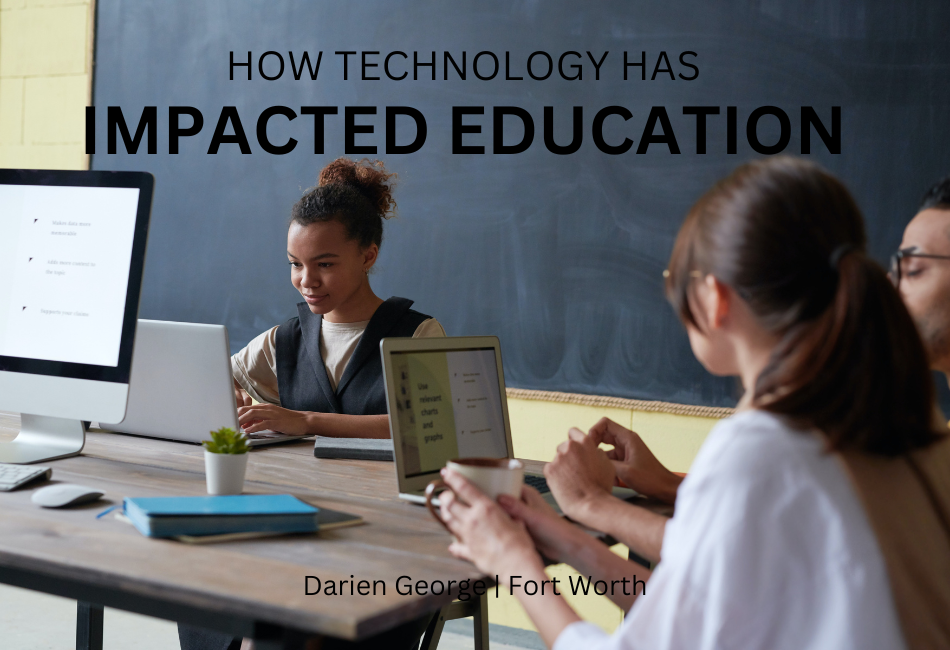
Today, technology plays a more prominent role in society than in the past. It is transforming our lives in various ways. It is changing the way we communicate, learn, and conduct business.
The rise of technology has led to the evolution of the learning environment. Students now have more choices when it comes to their education. In the past, people only studied in a classroom. Now, they can study at their leisure or even in a coffee shop. The teacher’s role has changed as the student’s skills and knowledge change.
The relationship between technology and education is becoming more apparent. This article aims to provide a comprehensive analysis of how it has affected the way we approach learning.
- More Access To Education
Thanks to the rise of technology, students now have better access to various types of information. In the past, it was challenging for people to obtain books. They were often scarce and expensive and only available to the rich and elite.
Various forms of educational content, such as books, podcasts, and videos, are now available online. Whether you need a degree or want to read a book, you can find it at your fingertips. Students can also get an education through online degree programs.
Despite students’ preference for traditional textbooks, digital books have opened up a whole new world of possibilities for academics. While they are often regarded as just digital versions of classic books, they are more than just digital books. They can be used to create interactive content, such as a PDF book, which can be used to illustrate certain concepts. In addition, they can help students reduce their book-carrying costs.
- Team Learning
The rise of technology has allowed students to collaborate more effectively. It has also allowed teachers to create effective instructional materials and enable people to learn new ways. Collaborative learning is when two or more people try to learn something together. It involves problem-based learning and discussions, and it allows students to participate actively in the process. Mobile devices and laptops are also crucial in this type of learning.
The importance of collaboration has become a requirement in today’s society. Various resources are available that promote and encourage cooperation, such as social networking sites and instant messaging software.
- Different Teacher Roles
In the traditional classroom, the teacher is the primary source of knowledge. The students are the passive recipients of this knowledge. This teacher model has been around for a long time and is still prevalent today.
Due to the technological advancements that have occurred in the field of education, the responsibilities of teachers and students have started to change. The former is now a guide on the side, as students are responsible for their learning and are more likely to use technology to gather information.
Various schools and universities across the country are starting to rethink their learning environments to support the 21st-century learning paradigm. This type of learning involves using technology to promote small group work and engagement.
- Catering to Special Needs
The traditional classroom framework is still prevalent in the world of education. It provided a static environment where every student had the same experience. There were also gaps in the learning experience.
The use of technology has allowed schools to meet the needs of different kinds of students. Students with special needs, such as those who are housebound or have hearing problems, can now get a better education with the help of technological advances. On the other hand, students with emotional, developmental, or academic disabilities can also benefit from advancements in this field.